• Bio
  • Services

Rebecca Jane

  • Be Luminous; Be Empty

    December 3rd, 2020

    Good news: I completed Embodied Philosophy’s online course called “Understanding the Tibetan Book of the Dead with Andrew Holecek.” In synchrony, while studying with this amazing teacher, my personal Sadhana happens to involve chanting 108 repetitions of the Maha Mrityunjai Mantra every day, three times a day, for the past 49 days. This mantra is from the Rig Veda and is known as the “death-conquering mantra.” After a couple weeks of practice of mantra repetition, an internal visualization arose from deep within me, spontaneously.

    Now, every time I sit, the following visualization–an inner experience of time-stretching and elemental merging–easily accompanies the mantra repetition:

    Energy moves up and down the chakras: when the energy pauses for decades at the root chakra, I am the peaks of the Himalayan mountains and mud and stone. When the energy pauses for centuries at the sacral chakra, I am fast-flowing rivers, rolling seas, and rainfalls. When the energy pauses for millennia at the navel chakra, I am every candle flame, every hearth fire, the Dhuni Baba built, Cerridwen’s cauldron fire, every sacred blaze, wildfire, and the burning sun. When the energy pauses for a kalpa at the heart chakra, I am wind blowing lovingly around the Himalayan peaks, blowing over oceans, over prairies, over marshlands, through windows, slamming into my beloved’s face. When the energy pauses at the throat chakra for a maha kalpa, I am blue sky, an ageless, expansive stretch of firmament witnessing the whirls of human, natural, and other worlds. When the energy pauses at the Third Eye for one day of Brahma, I am the white-hot, crystalline center of both the Star of Bethlehem and the Dhruva Tara. When the energy pauses at the crown chakra for a yuga of Brahma, I am the cosmic expanse that is infinite dark emptiness. I am the space that holds everything. I am all that; plus, I am the sound of the mantra vibrating through all that.

    This inner experience is a kriya as defined by Patañjali because it involves tapas, Svādhyāya, and iśvara pranidhāna. This is an inner experience that initiates me into timeless and space-less wonder over my own formless nature. At first, I repeated this contemplation as a tapas (discipline) until the visualization and mantra flowed continuously with me. This whole experience has been thoroughly enjoyable, delicious soul food. To flow with this kriya while reading The Tibetan Book of the Dead raises the hair on my skin, as though my whole being knows it is drinking from a source, and my spiritual nature looks forward to whatever arises through any bardo experience, not just the one after I leave this body but through all liminal moments and spaces. I humbly pray: may the benefits of my life’s practices be received by all beings everywhere. Integrating the book of the dead into my practice is a Svādhyāya (self-study).

    What’s more, I marvel and fill with awe to witness the fascinating treasure that this kriya brings into my life. Kriya creates the energy of the magnetism, and that is the iśvara pranidhāna (surrender to the divine).

    So, where did my surrender lead me?

    During his class, Andrew mentioned a book by Francis V. Tiso called Rainbow Body and Resurrection: Spiritual Attainment, the Dissolution of the Material Body, and the Case of Khenpo A Chӧ. Immediately, when I heard mention of this book, every cell in my body lit up, excited. Those words together, “rainbow body and resurrection” ignited my intense curiosity. Andrew said the book is esoteric and scholarly–it’s for “deeper divers.” (Let me add that this book also does not resonate much woman-oriented spirit that I have been more drawn to lately, so my attraction to it is surprising to me; thus, I surrender). I do wish to express how delightful it is to dive with beautiful beings such as Francis Tiso, Andrew Holecek, and Khenpo A Chӧ. Aware that these sages know nothing of my existence, I privately imagine myself a kind of monk brother who is intimately connected to them nonetheless–it’s important for me to insist that I feel that reading this book is the way to access and enjoy their company. The way I encounter these spiritual masters is as a friend and nectar-lover, but if I ponder the ways I do not exist to them, why not let that be? I am empty.

    I’m an ordinary yogi who is a deep diver. I read Tiso’s book slowly. I re-read many paragraphs. I like the kinds of fascinating questions he asks; the difficulty of the text is music to me; the investigation he is doing is fraught with noble flaws, complications, and challenges. It reveals cross-pollination of contemplative practice; it mentions a practice of embodying sunlight, which resonates with me; it discusses the enigma of researching, writing about, and describing the rainbow body as this is counter-intuitive to achieving the rainbow body; it suggests historical developments due to connections made on the Silk Road; it’s impossible, but because it is impossible that’s what makes it worth doing and reading about and being with. Tiso is attempting an inquiry that wants to honor dialogue between religions and belief systems, reveal how they impact one another. His book opens inquiry and contemplation on Jesus Christ’s glorious resurrection with inquiry and contemplation on the Tibetan Buddhist attainment of the rainbow body. I love it, especially if we can see that there is no inferior or superior ways but deep, equitible dialogue.

    I am especially enthralled with his discussion of the Shroud of Tarin. I hadn’t seen nor really heard of this shroud until reading this book. When I saw the image of the shroud in the book, I fell madly in love!
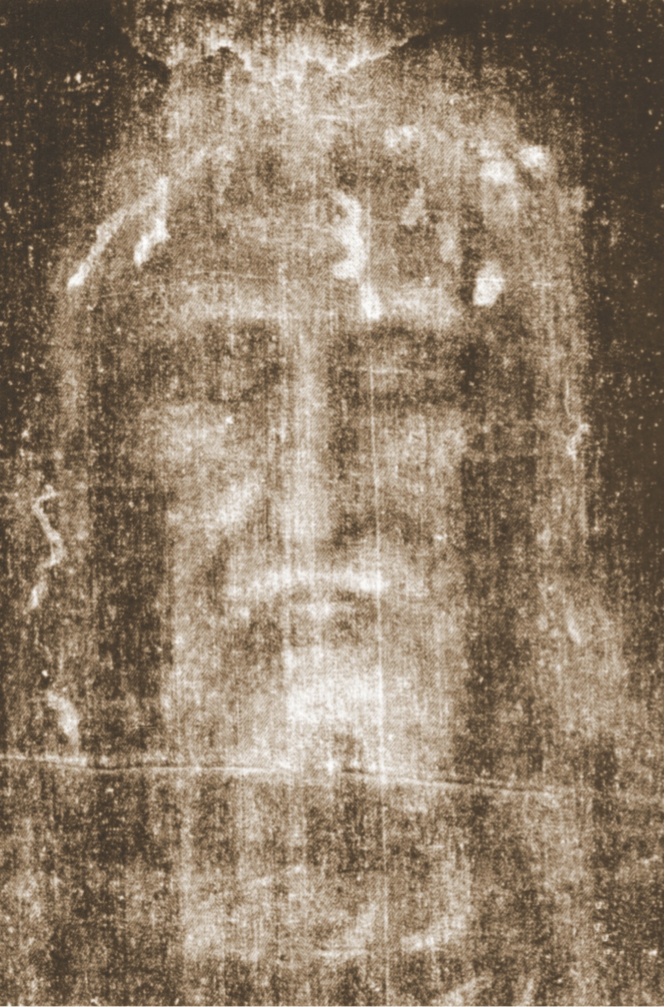
    A practice that I have started to do while I tuck into bed is to visualize that while I am covering my body with blankets to prepare to sleep at night, I imagine I am covering my body with the Shroud of Tarin. This visualization fills me with such a thrill that I swear I could just step out of my skin and join in blissful union with Divine Loving Kindness because it’s that simple.

    On another note, I wonder if Francis Tiso is familiar with Tom Kenyon and Judi Sion’s The Magdalen Manuscript. If I were to guide a class, I would recommend reading Tiso’s book together alongside Kennyon’s book. It’s a wonder to imagine all the ideas and inquiries that would arise reading these two books and sitting together through a tea ceremony. The Magdalen Manuscript reveals some dimension of Mary Magdalen’s experience with Yeshua (Christ), and their practice together of refining and empowering his Ka Body (subtle body) so that Christ could accomplish his difficult resurrection. According to this version of the story, that Ka Body practice was a key ingredient in Christ’s attainment. Being sensitive to this dimension of things, it is intriguing to notice that Tiso mentions the nuns who worked with Khenpo A Chӧ, but he did not interview the nuns. He did not include his talk with the nuns about the Khenpo’s visit to them one month before he left his body. This makes me feel that while Tiso’s book is amazing scholarship, it is missing an enormous piece of the picture, i.e. the divine feminine dimension of attaining the Rainbow Body. After reading Tiso, a huge question remains: What role does a divine feminine initiate and woman play in spiritual attainment of these men dissolving into light bodies? What about women who dissolve into light bodies?

    According to the Tibetan Book of the Dead, after death, while traveling through the bardo, the Noble One will experience a moment when it is time to recognize the divine lovers, a divine mother and a divine father, the doorway to reincarnation; be conceived. On Tibetan tankas, there is the graphic image of the deities enjoying sexual union. There is something highly sacred and important about the sexual union aspect of attainment. How does it relate to the “Initiatory Act of the Four Serpents” as Mary described it? And this is not the way we currently fathom the sexual relationship between two physical bodies. It is more of a spiritual sexual energetic that involves sophisticated connection of intention, strict focus, contemplative intensity, and prayer.

    Alas, I don’t teach a class. But there is an imaginary place I like to go to fathom there are people who are actually interested in these inquiries, and they meet with me in happy companionship. This place is called Murakami’s Jazz Bar, or sometimes it is called Mirabai’s Yoga Lounge. Wherever I dream up, I will continue to practice repetition of the Maha Mrityunjai Mantra plus that inner journey with the elementals and chakras. And for sure I am going to keep up with imagining that I am falling asleep at night covered in the Shroud of Tarin.

    Infinite pranams to all beings who read this essay and feel a sense of connection, and if you felt a sense of discomfort reading this, even better. Either way, may we enjoy cheerful companionship in the subtle realm. I am with you!     

  • On Voting and Sanskrit Study

    November 2nd, 2020

    I read Lofty Promises: An Election Eve Tribute to the American Essay. In that essay, Joey Franklin mentions that in 1961, James Baldwin wrote “The time has come, God knows, for us to examine ourselves but we can only do this if we are willing to free ourselves of the myth of America and find out what is really happening here.” Franklin’s gorgeous essay pays tribute to the literary form of the American essay as it has been a great tool for helping us to examine ourselves, to articulate what is really happening, and to free ourselves from ignorant myths.

    I like to wonder, are there other tools–in addition to the essay–that can help us to free ourselves of the myth of America and examine what is going on here?

    One way that I have found to free myself is to study Sanskrit language. In high school, I studied French. That freed me to explore avant-guarde aesthetics. In college and grad school, I studied Chinese. That freed me to become more concise in my writing. In yoga teaching programs, I have studied, read, wrote, and recited Gurmukhi. This freed me to explore the spiritual warrior within me.

    But now I am thrilled to be focusing on Sanskrit.

    From my previous experiences, I know that language study has proved a great way to free my mind from psychological conditioning, useless internal monologue in my native English, and tired cultural restraints. When I learn a new language and start to use that language, I feel that I grow a whole new personality, a fresh psychology, and a more expansive expressive range.

    What’s great about Sanskrit is that, while speaking in other languages can deplete energy (just consider how you feel if you have been lecturing in English all day long), speaking, repeating, and chanting Sanskrit is a life-giving force. The more you repeat Sanskrit, the more energy you have.

    Sanskrit scholar, Dr. Katy Jane says,

    When you speak, your life force gets expelled with each exhalation you speak. With every word, your life force gets diminished. Talking is truly akin to death.

    With Sanskrit–the language of yoga–the opposite happens. As you pronounce each syllable, your prana (life force) gets redirected back into your body, replenishing your energy. It gives you life.

    This election season, I have had the blessing and privilege to study Sanskrit. This has made me feel energized and happy.

    How has this study freed me from the myth of America? A current myth of America is that the leadership in Washington is contributing to our well-being. It is not. We need to take well-being into our own hands. I study Sanskrit, and I am not getting my energy depleted by engaging in unnecessary complaining. I am devoting energy to volunteer projects with local schools, reforestation projects, and literary arts and education. I am utterly clean and pure as far as feeling influenced in my mind and energy by any social media or misinformation; my internal well-being remains totally in tact and even joyful. I also know exactly what words to say aloud that will serve to refuel me and those with whom I am speaking. Sanskrit helps me know how to never waste breath and never waste words. Both breath and words are precious resources for maintaining good physical, mental, energetic, and spiritual well-being.

    With humility and enthusiasm, I start with meditation on the Sanskrit alphabet in the human body. This encourages freedom from the myth of America. This is also a good meditation for helping to know what exactly is going on here. The experience of freeing oneself from the myth of America is different for everyone. The experience of knowing exactly what is going on here is different for everyone. Each experience is unique, necessary, and part of the divine matrix. So, it is impossible to put into a blog post, or even in an American essay, what these liberations and revelations look like for each unique being. But I can sense that, for me personally, studying Sanskrit, being a humble and eager student, and meditating on the Sanskrit alphabet, is a great start to feeling absolutely sovereign within myself and my community. I do plan to vote, but my act of voting is beautifully complicated by the fact that the American myth that I have released is the myth that I am governed or that I am governable. I am not either of those.

    I am conscious.

  • My Belly, a Cauldron

    September 18th, 2020

    I enjoyed a beautiful seminar with Judith Blackstone yesterday. She guided us through a subtle meditative process that allowed us to take time to be each part of our bodies AND engage the unified field of consciousness.

    I’ve been meditating for years, and I have always heard the guidance, for example, to “be aware of your feet.” But Judith guided us to “go inside your feet.” So, with my entire consciousness, I occupied my feet. Then she guided us up the entire body, part by part, inviting us to go within each part of the body and BE inside that part of the body.

    This was a nuanced way to focus for me.

    Because someone at the seminar asked Judith, “what is the difference?” I would like to try to describe my sense of the difference between being aware of a certain part of the body and actually going inside that part of the body.

    In the process of being aware of my feet, my mind sees my feet and my sensitivity feels my feet. But in the process of going inside my feet, I do not just see and feel my feet; I AM my feet. This made me subtly engage with my feet, investing my whole state of being inside my feet.

    I wept during the process because it was as if my feet were sweetly singing to me, oh, thank you for being here, finally.

    Being inside various parts of my body and actually dwelling inside those parts was a way for me to access total embodiment. I liked it.

    Then Judith guided us to merge the content of our whole being with the infinite space surrounding us and within us. We connected deeply within before and while connecting to the unified field of consciousness.

    According to Judith, and I agree with her, if we do not engage our entire body and bodily experience in its entire here and now existence–with all the garbage and all the bliss–but we just try to go straight to meditating on and connecting to the unified field of consciousness, that is when we experience spiritual bypassing.

    Recently I walked away from practicing Kundalini Yoga as Taught by Yogi Bhajan because Yogi Bhajan is a known sex offender. Many people who are hurting in that community are calling out the elders, the legacy teachers, and the KRI / 3HO establishment and pointing out the ways they are spiritual bypassing.

    Because the term is being thrown around a lot, it has became a term that needs defining, analysis, critical inquiry, and play. Where KYATBYB is concerned, many people who stake their livelihood on teaching Kundalini Yoga are now scrambling to disassociate with Yogi Bhajan. They’re working to separate the teacher from the teachings. They are attempting to rebrand. They are removing the old “master teacher’s” image from their books and altars and t-shirts and mugs and whatever swag shit they sold to make money. They are doing this without telling the story honestly about how and why they are doing this. They are doing this without clearly coming clean about their intentions for doing this.

    So it feels like we need to be careful out there, anything that is being sold as “kundalini yoga” should probably most accurately be branded as “kundalini yoga that was once taught by yogi bhajan who abused women and children.” But I guess that is too long of a brand name to fit on Instagram posts. Maybe a better brand would be “kundalini yoga as taught with a heavy dose of organizational spiritual bypassing.” Because just as it is dangerous to go straight to unified consciousness without going through the body, it is also impossible to apply, share, and spread teachings without attempting to know and engage with that practice’s history and thus its teacher.

    What I have found most helpful in moving away from kundalini yoga is embracing Celtic Magic. I am reading The Book of Celtic Magic by Kristoffer Hughes. At the same time, I am also enrolled in Embodied Philosophy’s year-long Yoga Philosophy certificate program. I don’t need another certificate; I just adore the community and the critical inquiry that I have found here. Feels like home.

    My morning Sadhana includes practice of Surya Namaskar, Chandra Namaskar, Shiva Namaskar, Nadi Shodhana, fluttering the breath, and watching the breath. It’s simple. Not rocket science. I chant to the Dark Goddess of Celtic lore, and I chant the Tantoktam Devi Suktam. It’s a powerful practice that calls my power back to me and fills me with joy. I don’t need whatever program so many folks are trying to sell to me.

    That said, I do like this yoga philosophy certificate program that I have enrolled in for this year. This year, I will complete a self-study project that engages me with both Yoga tradition and the Celtic Magical tradition. I will not do this as an objective study but as a quirky scholar / practitioner of both traditions. I’ve found a community of like minds who value critical inquiry. This is the best way I have found to move forward and to heal from the seven years during which I now feel like I was being duped by institutions that claimed to teach yoga (the Kundalini Research Institute, Happy, Healthy, Holy Organization, Sikh Dharma International, and Making of a Yogi). To me personally, I see these organizations are flawed at the core.

    Ultimately, I don’t even like institutions. I like a small group, intimate experience, that welcomes creative thinking, integrity, transparency, zero tolerance for abuse, and is genuine and playful.

    If you like that too, please join me this Saturday (12:30 – 1:30 PM) for Meditate and Write Flash. This class benefits the Writers Ink community so this community arts center can stay open (online) during these times.

    As I am growing in my love for the Cauldron and all that it symbolizes (the womb). I have become more and more excited about inhabiting my belly during my meditation. The gut is a wonderous place to dwell. All the conjuring and brewing and digesting that happens there! Wow! Besides, I need a heavy pot to melt the huge mix of contemplative practices I have engaged (plus, all the bull shit I have been forced to digest) over the years. Though I may be accused of spiritual window-shopping, I don’t care. I am a creative writer. I shall humbly study the Celtic Magical tradition and the yogic tradition as a way to move through life with clarity, balance, and exuberance. If you have read this far, thank you for being with me. May this expression of longing be my way of bowing to your consciousness. I bow to the cauldron within you. Peace!

  • Be Dark, Soft Earth

    July 7th, 2020

    Rebecca Jane's avatarRebecca Jane

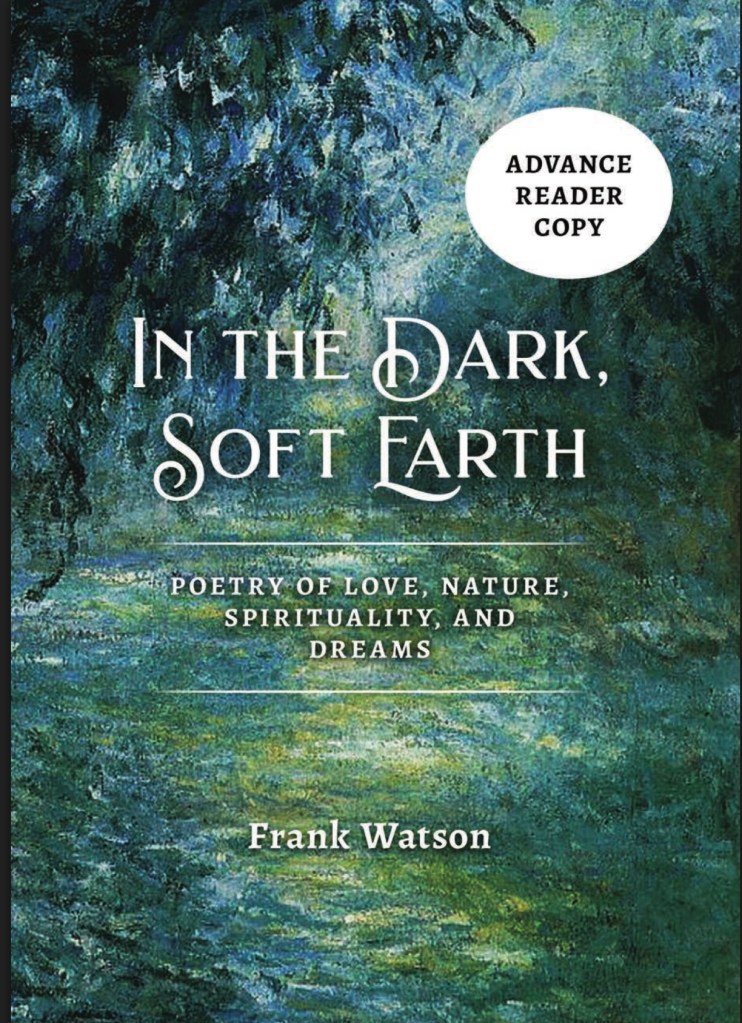
    The poet Frank Watson has given humanity a gift, a collection of poems entitled In the Dark, Soft Earth: Poetry of Love, Nature, Spirituality, and Dreams.

    weeping woods

    Book One is called “Within the Weeping Woods.” Each poem, very short, conjures the spirit of the nature haiku. Here, we are offered a chance to forest bathe the mind. Reading these poems is a wilderness adventure that tangles up desire, and I feel myself hearing my heart beat inside the forest and beneath its soil. This inner forest is dense with secret glades in which a reader can hide within forest Silence. There is intimacy but also distance that soothes. Though many scenes revealed here are absolutely terrifying, the language is so stunning that terror is totally erased by beauty. We become like the fool who, “entranced / by the beauty of a rose / he falls off a cliff…

    View original post 1,054 more words

  • Writing ~ Sacred Geometry

    May 23rd, 2020

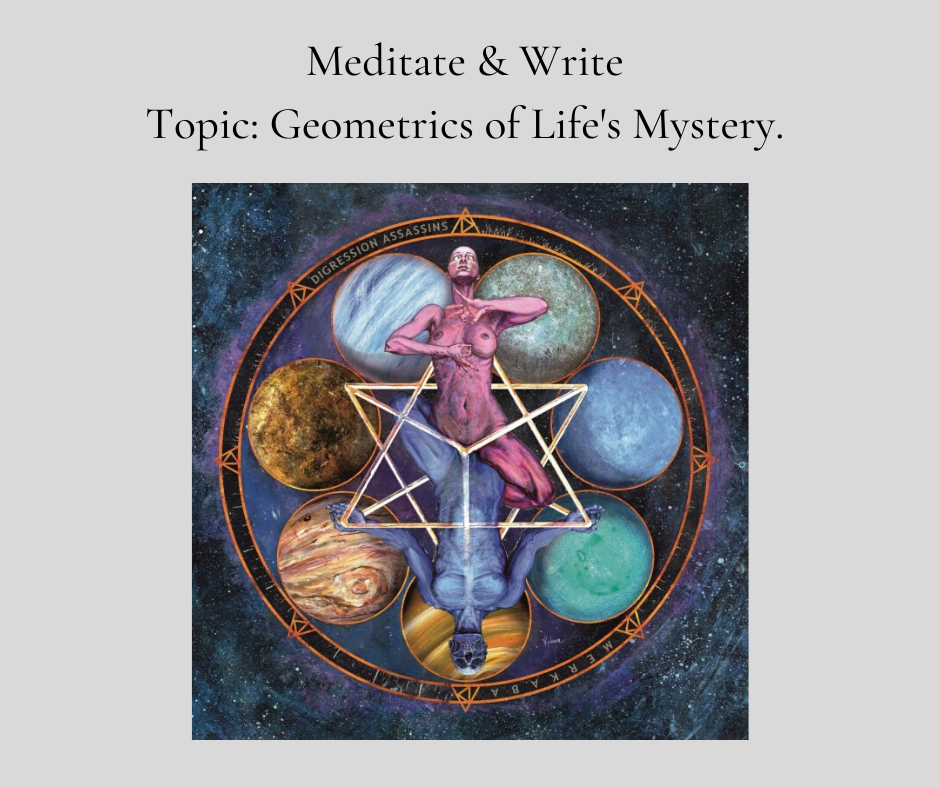
    On Saturdays, I facilitate a contemplative experience that is called “Meditations for Writers.” We are an intimate group of writers from here and there. We breathe, we practice a meditation, and we write from a prompt.

    This time we will play with this prompt: Draw a sacred shape, any shape, a sacred geometry. Write names, rhymes, stories, and phrases on the lines and in the spaces of your shape. Behold your creation!

    We will also breathe deeply, and in our mind’s eyes we will visualize drawing sacred geometry around people we love, homes, buildings, houses of worship , playgrounds, shopping malls, schools, theaters, insects, trees, flowers, etc. Any person, place, or thing that we hold sacred, we shall slowly surround with an imaginary sacred shape. We draw sacred geometry around Mother Earth. We draw sacred geometry in the cosmic infinity. Our imagination gets an excellent workout. We remain in this meditative internal visualization for as long as comfortable. It’s fun!

    We give ourselves play time, stillness, space, and permission to behold every creation.

    © Rebecca Jane / Yogi Ma, 2020

  • Be Dark, Soft Earth

    April 5th, 2020

    The poet Frank Watson has given humanity a gift, a collection of poems entitled In the Dark, Soft Earth: Poetry of Love, Nature, Spirituality, and Dreams.

    weeping woods

    Book One is called “Within the Weeping Woods.” Each poem, very short, conjures the spirit of the nature haiku. Here, we are offered a chance to forest bathe the mind. Reading these poems is a wilderness adventure that tangles up desire, and I feel myself hearing my heart beat inside the forest and beneath its soil. This inner forest is dense with secret glades in which a reader can hide within forest Silence. There is intimacy but also distance that soothes. Though many scenes revealed here are absolutely terrifying, the language is so stunning that terror is totally erased by beauty. We become like the fool who, “entranced / by the beauty of a rose / he falls off a cliff / blown only by the gentle breeze.” Here, terrifying things are delivered gently. Also, it’s remarkable the way each stanza feels natural and not crafted, as if words simply blew in through the poet’s heart on the breeze. Effortless poetry! Ah!

    dust

    The poems in this collection can also create a sense of being a speck of dust, traveling free upon the wind and upon the wind’s whims; can I be so quiet, content, and unnoticed, even as I am thrust upon violent storms, even as I am settled home, longing we meet in a crowded jazz club? I read the collection while sitting under this tree in my front yard. I hear jazz music through the kitchen’s open window. Crows laugh. Dogs bark. Insects crawl nearby, and the wind is moving the trees. I notice nature with nuanced perception while I am reading Watson’s poems. This is reason enough to give this book a read and to read it again. I love the mood each poem evokes in me, like I am making love to the Mystery. It reminds me also of time I have spent sitting in dark temples, and one distant memory of practicing “Grave Meditation” with yogis in the Himalayas.

    Grateful to Frank Watson and Plum White Press for the ARC
    from In the Dark, Soft Earth by Frank Watson

    eons

    This particular poem welcomes the reader to witness a moment where the she of the poem confronts a secret she has been keeping from herself. She realizes an ugly truth, an inner truth that she had tried to ignore or suppress; yet, she had also stored it away in her treasure box. What a provocative juxtaposition! Then, an image arises in a simple phrase that hints at mischief, but it’s the sound of the words that is more important than their meaning: “sunlight broken / into a thousand little sins.” Then, the best part of the poem, is that the speaker, the I, the narrator of the poem, is but an invisible speck, some kind of micro-organism, somehow bewitched and floating “between the eons of her eyelashes.” This is an incredible shift in perspective. As a reader proceeding through a few short phrases, I have even forgotten to wonder what is the secret in the treasure box because I am now enraptured by the wonder about myself as dwelling between the eons of her eyelashes, contemplating myself as a floating micro-organism. Whoever “she” is in this poem, she is of goddess dimensions, and I am filled with awe.

    This is just one poem from this collection. Every poem takes the reader on vast journeys through perception. Yet, the poems are immaculately short, distilled moments that trigger ancient contemplation. Spiritual awakening gets slammed together with lots of kissing of the Earth, kissing of moonlit waters, even kissing of the dead. The whole experience satisfies Spirit and sense perception all at once. And the Spirit world and the sensual world can be one, and this is absolutely OKAY, dear yogi! Plus, for viewing pleasure, the book contains artwork by a variety of masters, ranging from Keido Fukushima to Wassily Kandinsky, alongside the poems these works inspired in Watson.

    butterfly

    The collection is divided into ten “Books.” Each book has its own title, such as “Between Time and Space,” “The Percussion Mind,” and “Stories Before I Sleep.” The ideas and moods that these titles provoke invite me into contemplative space. I sit quietly, and I am content. That’s it!

    While there are weeping woods, there is also jazz. And these haiku-like poems create a sense that the primal cries before humanity, with Earth always expressing herself in infinite variety, are not separate from the contemporary moans of urban music. We enter a consciousness where desire is a dream state, and I find myself longing to reunite with my Lover and give him the world’s last drop of rain, or the raven moon, or a road he may travel that will never end. I imagine the I of the poem to be my happy lover telling me that he lives his life in a butterfly’s dream. He reminds me of the Taoist adept, Zhuangze: keep life weightless. I wish I could say this to someone: if I am in your butterfly dream, may I be perceived as the nectar?

    kiss

    Finally, with this book, I find myself retreating again to the yogi cave within me and welcoming a gang of midnight philosophers to help me light the One Heart Fire at the hour when all across the globe, each has agreed to light his own lamp. If we build up enough nerve, we’ll all whisper: “We know how to guide the stranded souls. Look, over here! See how there is so very little distinction between what is a human form and what is Earth form? Be guided by the rhyme in twilight! See poems pouring tea for the Haiku that breaks the rules. Understand that which feels familiar is a bridge to mischief! Let’s cross together!”

    In the poem “apparition,” there is a broken violin and some shapeless wonder that is rolling from one end of the world to another. Is it the poet that kisses Earth and moonlit waters and sunflowers? Or is it that the poet has become the foot or the lightbeam or the raindrop that touches the forest floor, the lake’s surface, or the flower’s petal? I have got to remember to be grateful for these poems that give me a fleeting chance to release my attachment to this human body. Be a drop of rain. Be a moon beam. Be a bear paw. And once I become these things, what does it feel like to touch flowers, lakes, and dirt?

    who am I?

    Who is the poet? He is “neither man / nor phantom / between the worlds.” Who am I? I ask again as I re-emerge from the dream of reading this collection. I stand up from sitting beneath this tree, and standing up after having read this book is the realization that this was not a dream. This deep peace within me is the real deal.

    Frank Watson’s In the Dark, Soft Earth is a beautiful book. I hope you will read it, and allow it to guide you to enjoy your Self, thoroughly.

  • Appreciate Transitions

    April 1st, 2020

    What does it look like to remember we are mortal and still live joyfully? When we say yes to life and reach for our fullest potential in any moment, how do we let it all go at the end, easily? When we allow Life its full expression through us, how does this Life eventually wish to greet Death? How shall we die consciously?

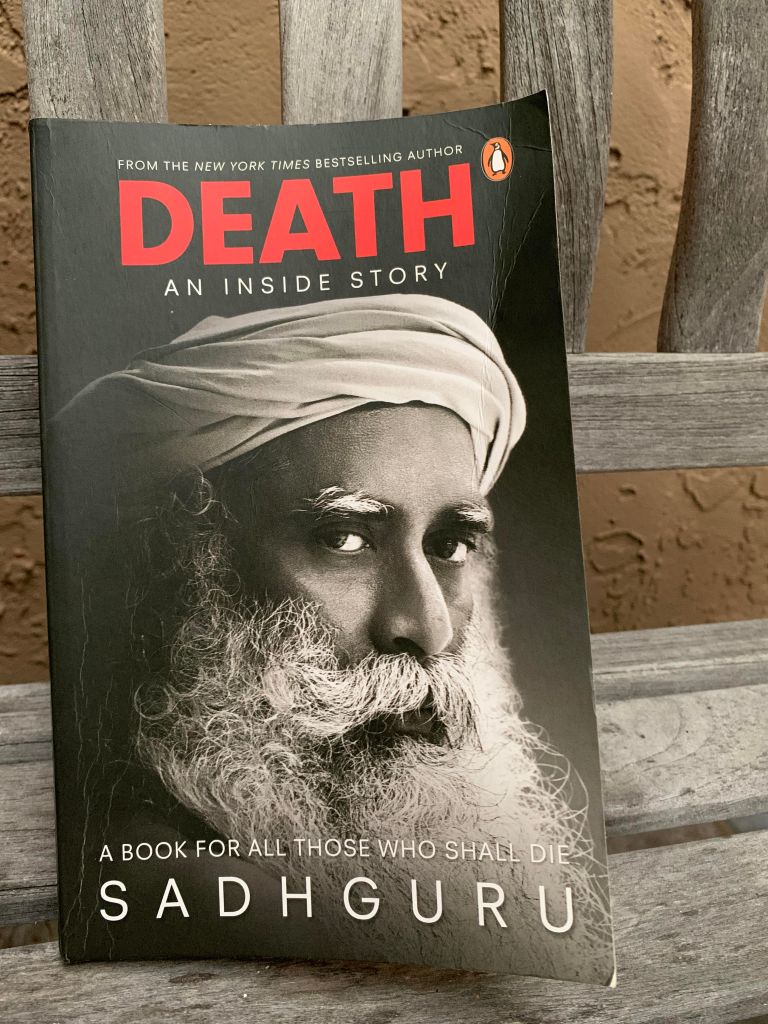
    These are central questions to play around with while reading Sadhguru’s book Death: An Inside Story. He likes to say that this book is only for those who shall die. Then he laughs at his own joke. Today (3/31/2020), during his live YouTube talk, he mentioned that this is a book one should read alone and in one sitting. Then the reader can slowly digest this inside story so the consciousness may learn to be with all the dimensions of the reality of mortality. Reading this book, I felt like I was sitting on a park bench next to a wise grandfather and listening to him ruminate about death.

    Read Death Alone

    I read this book, not in one sitting as I am a slow reader. Also, because my children and the family dog must be nearby while we shelter from this pandemic, I took the advice from the book and held my connection to my current environment very loosely around me. Sure, I am alert to my family’s needs and provide all necessary care and attention; but it does feel good to hold my connection to this life loosely. Sadhguru says this is one reason to wear loose-fitting clothes–it’s a way to feel the elements interact with the skin. But also, wear loose clothes as a reminder to wear Life loosely, like a loose-fitting garment that is easy to discard. Allow lots of room in these flowing clothes. If and when it is my time, I’d like to gently dissolve away. I’d like to turn myself into air and leave on the breeze.

    Be Aware Through Transitions

    In my humble opinion, the best advice this book gives is to practice being aware—when dozing off to sleep—of the moment that consciousness shifts from being awake to being asleep. To take it a step further, humbly attempt to be aware of shifting from being asleep to dreaming. Be aware of shifting from dreaming to deep sleep. The teachings say that if we can remain in a state of awareness during these shifts in consciousness, this will be helpful for us to remain conscious during the death process. This awareness is the Ultimate Witness to every state of consciousness, and the yogis call this state Turiya. This blog posts explores awareness during various kinds of shifts. And once we become aware of transitions, the Hathors encourage us to appreciate those transitions.  

    See This Page Blank

    Sadhguru’s Death book does not offer much detail as to techniques used for remaining awake while sleeping and remaining asleep while awake, but he gives assurance that if we have a daily meditation practice, we can refine this witnessing consciousness. The way I have been remembering this observation is to just tell myself: Stay awake while falling asleep. Be totally aware when the shift happens. Awake and asleep are just another set of polarities that a yogi learns to bring into total balance and total unity inside. Why not enjoy merging opposites that can continue throughout the day and night, now and then, here and there, before and after, within and without. Eventually, there is little to no distinction between opposites. It’s funny being infinity and being finite at once. There are words on this page, and the page is also blank. There is this inhale at the top that changes into an exhale but before it changes it is neither inhale nor exhale. That’s where I can be. Listen to music. Listen with each note when it is not yet the next note. Be aware in that space.

    Shambho!

    Inside this body, I lovingly wrap awareness around the central subtle nerve channel of the spine, the Sushmana Nadi. I focus on the energy moving there until I sense its up and down flow. Then I gently coax its upward flow to touch the Brahmarandara and blow it out to merge with the Infinite. Easy! I have made a promise to myself to live this life as a yogi because I want to die consciously. See, I am complete. All future and past turns around and through all cycles cease when I hold my awareness in any space in between and whisper Shambho. For lifetimes already, my personal imagination has rolled around joyous feats of creating internal parties for mystics, lawyers, novelists, poets, sages, green grocers, trash collectors, criminals, failures, judges, sex offenders, bus drivers, doctors, and musicians. My inner world is an artists’ retreat with all of these beings running around in total freedom, joyous abandon, and naked wonder. So, what more is there? Goodbye Life and Hello again. Each time I take leave, I joyfully whisper: Shambho!

    Are You Going to Scarborough Fair?

    As I write this, my daughter is working hard to learn the song “Scarborough Fair” on the piano. She slowly works through each note. She will practice and practice until she receives a sticker to indicate she has completed her time with this song. Then, with dispassion, she will turn the page and move on to learn a new song. I will witness her turning the page and be sure to offer my awareness to the moment when the page is mid-turn; again, I will internally utter Shambho!

  • Conscious Handwashing

    March 26th, 2020

    In uncertain times, what can we do? While we are staying at home, we can certainly wash our hands, consciously! And there is a way to get really into washing our hands without becoming obsessive-compulsive germaphobes.

    I appreciate the World Health Organization’s short video tutorial on the proper way to wash our hands. Washing every surface of the hands is proven to be an effective way to reduce the spread of viruses. So let us hope that if we have the resources, we have started to pay much closer attention to washing our hands with these precious resources: soap, water, and mindfulness.

    Columbia University School of Nursing’s Handwashing expert, Elaine Larson says, “quality handwashing matters just as much as quantity. Count to twenty seconds, sing the ‘Happy Birthday’ song twice — heck, blow through a whole aria — but it will be for naught if you are not washing every surface of your hand.”

    Good advice. Wash every surface. But let’s also contemplate beyond the surface.

    As a yogi, I would like to take the handwashing protocol a step further, if I may. From a yogic perspective, the whole routine of washing every surface of the hands will be for naught if we do not bring our most expanded awareness to our actions. Yes, wash every surface of the physical hands; but also, involve every layer of being in the action of washing hands.

    Health professionals tell us that washing hands is the most cost-effective way to reduce the spread of respiratory infections. Good news. When we are deeply mindful, there is also a deeper effect than monetary savings. To yogis, any activity that involves our attention on the subtle levels of being can and does impact our physical well-being. If we make it a practice not only to concentrate on the act but also to personally consecrate the action of washing our hands, this subtle level sacred offering can be a simple way to achieve collective upliftment in the collective human subconscious. Bringing consciousness of the subtle realms during this time of social, physical “isolation” can help mitigate the stress we may experience from isolation. Also, bringing more sacredness and consciousness to the action of washing our hands can prevent the routine from becoming a boring, mindless chore. Instead, washing our hands will be a sadhana (a consciousness practice). Plus, making it sacred helps avoid making handwashing an obsessive-compulsive habit done out of fear.

    This blog post offers a way to make handwashing into a yoga kriya that will activate multiple layers of experience. We will slow down, bring new consciousness to handwashing; plus, during this time when yoga studios are closed, washing your hands can be your yoga practice (please remember, yoga is not only asana / postural practice).

    What is a Yoga Kriya?

    A yoga kriya is a series of connected movements that infuse a certain kind of energy and consciousness into these movements. Yoga kriya gets us involved in our actions beyond physical experience. So, not only do the exercises engage the physical body, but they coordinate the physical body to harmonize with the mental body, the breath, the intuition, and non-physical dimension that, once we touch it, makes us blissful.

    Why Practice a Yoga Kriya?

    Yogis make it a practice to bring a certain frequency of consciousness to every movement, every action of every day. One way to do this is to internally chant a mantra while going about the day. This means that for a yogi, the advice to “slowly count to 20 or sing happy birthday while you wash your hands” seems frivolous or mindless in a way that risks not bringing multi-dimensional, slowed, calibrated attention to the task. When we wash our hands as a yoga kriya, we create an opportunity to bring more dimensional quality to our attention, and perhaps even give a sacred sense to our handwashing.

    This yoga kriya involves all that we are in a slowed down moments when we are washing our hands. Please note, this practice is not coming from any yoga lineage, culture, or institution. This handwashing yoga kriya emerged due to our shared experience, and it is a kriya that invites you into the moment washing your hands to play and just be you here.

    Handwashing Yoga Kriya Instructions (video is below)

    • Stand before a wash basin with hands in prayer mudra. Breathe long and deep for three long, slow, deep breaths. Be present with this moment as if you are in the presence of someone or something that you hold dear. In other words, bring a sense of endearment, or even sacredness, to this present moment.
    • Now open the palms and face the palms forward at the level of the shoulders. Continue to breathe deeply, and visualize a warm, white light beaming out from the centers of your palms. Greet the air around your hands with gratitude. Feel gratitude towards the air, the hands, and the breath. Dwell in gratitude with deep awareness of the element air.
    • Turn the water on and allow water to flow over the hands. Greet the water with gratitude.
    • Turn off the water (conserve water), and soap the hands.
    • Chant the Yoga Yoga Yogeshwaraya chant (or any mantra you like) with the movements:

    Yoga Yoga Yogeshwaraya

    ( Move palms together in circles, circle in one direction then circle back. )

    Bhuta Bhuta Bhuteshwaraya

    ( Touch all fingertips of one hand to opposite palms then move in circles,

    left then right )

    Kala Kal Kaleshwaraya

    ( Wring fingers within fisted palms, like wringing water out of a wet cloth, left on top then right on top. )

    Shiva Shiva Sarveshwaraya

    ( Rub or massage interlaced fingers extended, right over left then left over right. )

    Shambho Shambho Mahadevaya

    ( Rub or massage left thumb with right hand;

    rub right thumb with left hand. )

    • Repeat the chant with movements, at least three times with soap.
    • If possible, use elbow to turn on the faucet and rinse the hands in a conscious set of hand positions: 1. Cup the hands to receive the water. 2. Turn fingers toward the drain, and let the water run off the hands. 3. Press palms together and rub in a circular motion under the water stream.
    • Use elbow to turn faucet off. Shake hands. Feel the air and water interacting. Feel the drops falling off the skin. Be so present with the elements of air and water that you identify with them. Gently towel dry with a clean towel.
    • Bring palms facing up just in front of shoulders and breathe long and deep for a few moments.
    • Inhale and bring hands up to the sky arms at 60 degree angle. Lift your heart closer to the sky. Feel lift in the rib cage. Feel more length in the spine. Feel the hands lifting up. Feel weightless.
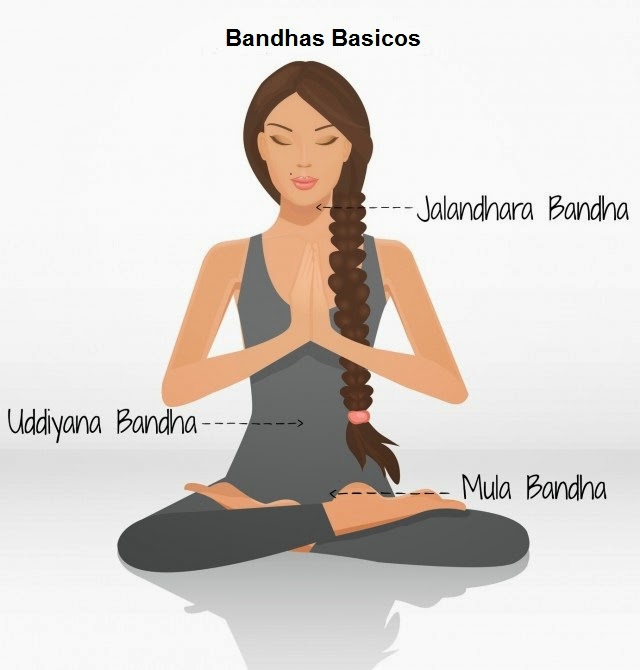
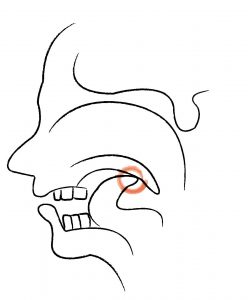
    • Inhale, hold, engage the internal locks (the bandhas) from the root lock to the Jiva Bhanda. Close the eyes and roll the eyeballs as if to look through the top of the head. Engage all the locks, not in a forced way, in a gentle way. Root lock means tightening the muscles in the anus, sex organs and navel point. Feel the vertebra in the neck are lengthened not crushed. Apply Jiva Banda, which means press the tongue against the roof of the mouth. Just be sure you are concentrating on this internal muscle squeeze and pull up at the end of washing your hands. This internal pressure is what creates the difference between handwashing being a yoga kriya and handwashing being a mindless routine. The idea is to pull internal energy up the spine using these locks. (Note: the chin does not pull down to the chest as in Hatha Yoga style Jalandahara Bandha; the idea here is to keep the neck tall and pull energy all the way to the crown by rolling the eyes upward.)
    Where the banhas are located, engage them gently. No need to pull the bandhas as intensely as you might during asana practice.
    This image is more like Kechari Mudra where the tongue is curled and pulled back. That is not necessary here. Simply pressing the tongue to the roof is Jiva Bandha. Jiva Bandha is sufficient for our purposes here in handwashing kriya.
    • With the breath held in and the locks applied, hold. Visualize the rays of the sun stretching into the palms of the hands. Feel absolute union with all that is. Feel palpable silence here, and dwell in that silence for as long as is comfortable.
    • Remain in this position and visualization with the exhale, gently throw all the breath out as you release the locks. When all the breath is out, engage all those locks inside the body again. On the exhale, include the diaphragm lock (called Uddiyana Bandha) in which muscles pull the diaphragm up into the rib cage (again, engage it gently, probably no need to do it full on). Again dwell in the palpable silence as long as possible while in a state of being absolutely empty.
    • Inhale and exhale powerfully and lower the arms to bring the hands back into palms pressed together at the heart canter. Send out an intention for health, union, peace, restoration, any creative intention…

    May we treasure the unity the world is experiencing now because we are all facing the same challenge. The virus recognizes no national borders, but, hey, neither does human consciousness. The virus is a spiritual teacher in a sense that it is making us appreciate those things we take for granted and making us slow down and go within (plus it is a cruel teacher and often times spiritual teachers get cruel with us). May anyone who feels comforted by this know that I am here, consecrating my handwashing routine, and dedicating my clean hands and my clean heart to the health and wellness of all beings everywhere. Sat Nam! Namaskaram! Amen!

    Instructional Video

    Please view this instructional video if you prefer video over the text.

    If you feel called, please donate whatever you can to the frontline responders combating COVID19. Thank you!

    Get supplies to frontline responders combating COVID19!

  • Magdalen Yoga

    March 6th, 2020

    Magdalen Yoga

    is a simple practice for anyone to practice daily. Practice lovingly.

    Unite With Sutras

    First, Gently Allow Consciousness to Echo These Sutras:

    Woman, Rise as Dawn.

    Woman, Your Touch is a High Honor.

    Woman, Your Body is Sacred Geometry.

    Woman, Your Mind is a Consecrated Altar.

    Woman, Your Emotions Carry All Across Oceans of Love.

    Woman, Your Voice Vibrates Goddess Joy,

    Goddess Laughter, an Awakened Song.

    A Woman’s Heartbeat is the Kiss of the Divine.

    A Woman’s Breath Nurtures God’s Breath Unto Eternal Life.

    Woman, Feel Empowered Through Your Sensuality.

    Woman, Know Divinity with Desire.

    We See: Women Embody Ancient Temple of Isis Teachings.

    Her Every Blink of Her Eyes Releases 1,000 Healing Truths.

    She Knows How To Create Absolute Union

    of the Earthly, Animal, Etheric, and Astral Realms.

    Tune In

    Aum Dum Durgaye Namaha

                                 Aum Dum Durgaye Namaha

                                 Aum Dum Durgaye Namaha

                                 Aum Dum Durgaye Namaha

                                 Aum Dum Durgaye Namaha

    Breathe and Move

    Surya Namaskar Above Her and Surya Namaskar Below Her

    Chandra Namaskar to Her Left and Chandra Namaskar to Her Right

    Shiva Namaskar Within Her and Shiva Namaskar Without Her

    She Relaxes in Yoga Mudra, Timeless, the Beginning, the Now, and the Future are With Her while She Relaxes Here in Yoga Mudra Breathing Lovingly and Slowly and As Deeply As The Deepest, Darkest Rishi Cave.

    She Balances in Vrksasana, and She Is With Every Tree In Perfect Balance.

    She Dies in Shivasana; She is Reborn in Shivasana.

    Meditation

    She Wakens Into This Simple Meditation:

    She Sits with a Rising Spine.

    She Chants Aum Dum Durgaye Namaha infinitely, slowly, quietly, and lovingly on each chakra within the body and above the body and below the body.

    Close

    She Closes Her Practice With Her Own Prayer to the Creatrix

    May All beings Be Free. May All Beings Be Filled With The Peace Within Maaaaa. Shri Maaaaa. Hari Maaaa. Jai Maaaa.

    Aum Shanti Shanti Shantihi

    {Secret Note: There is a Secret Mantra Flowing Beneath This Practice: No Need To Chant This, Just Practice To Hear It Far Below; The Earth is Chanting This Beneath Far Below In Her Deep Down Voice:

    Buddum Sharanam Gacchami

    Dhammam Saranam Gacchami

    Sangham Sharanam Gacchami}

  • As Taught By Cosmic Mothers

    February 23rd, 2020

    Pamela Saharah Dyson’s memoir _Premka: White Bird in a Golden Cage: My Life with Yogi Bhajan_ teaches us that human consciousness must grow beyond patriarchal hierarchy in the spiritual dimension. Yogi Bhajan treated people cruelly. We knew this even before Pamela’s book came out. I stand firm in my inner intuitive awareness that spiritual teachings do not need to be taught through cruel manipulation of people’s energies and psyches.

    I have abandoned my yoga teaching position at Cosmic Flow yoga because what I read in Pamela’s book confirmed my long-time suspicions that something was deeply flawed at the heart-center of this quirky style of yoga. I suspected it was flawed because of the ways that I have been spiritually, psychologically, financially, and socially manipulated by kundalini yoga organizations and kundalini yoga people stuck in hierarchical ways of being, even one inauthentic leader who paraded as an advanced teacher. But now I am so sad to see further that Pamela’s spiritual family did to her what the Christian church did to Mary Magdelen. Please read _The Magdalen Manuscript_ by Tom Kenyon and Judi Sion.

    Maybe look at it this way. If you are one who is inclined to see meaning in past lives, try to see it this way: Women who surrounded Yogi Bhajan in his inner circle were past life adepts in ancient Egyptian Cosmic Mother Temple of Isis Creatrix lineages. I bow to these women and I welcome their stories. I want to hear the story of the creation of this style of yoga as if these women had been all along the ones who shared a collective seat of honor with the Mahan Tantric yogi bhajan. The true story is that he is not the only one who built this family. Truly, it was a collaboration of energies. If he was making love to these women, it was because it influenced the flow of Creative kundalini. Don’t you think this is an essential aspect of the teachings that we ought to study deeply without acting like a bunch of prudes and victims in tight-ass sex-denial? We are yogis for crying out loud! The body, with all its functions, is a temple and what we choose to do with it matters! So, yes I want to hear the women of the inner circle speak their own true stories, every raw detail. I am listening. To what degree did having these kinds of relations and manipulating people on every level impact Yogi Bhajan’s kundalini energy inside his physical, emotional, and spiritual body? Too bad we cannot ask him this now because he is dead. Because the way he manipulated people killed him too soon. But we can listen to women. Well, then …

    I want Kundalini Yoga as Taught by the Cosmic Mothers!

    Dead is the era when all the master spiritual teachers are those men who have grown long beards. Dead are the times when there is a master up on a pedestal who is surrounded by adoring servants / disciples. Grieve. Move on.

    Life itself is a spiritual teacher. And in case you haven’t noticed, life is filled with men AND women. And, in case you haven’t noticed, women have messages that need to be heard, integrated, and celebrated. We need the WHOLE story if we are to be happy, healthy, holy.

    Long-bearded teachers, I have listened to your wisdom for thousands of years. But now, we are going to explore and expand our consciousness beyond the wisdom of the bearded sage. Because as we have learned collectively from our experience, the men with the long beard who we venerate as our spiritual leaders, while sure they have raised our consciousness to some degree, they have also revealed their limits. I have proffered my respect to the bearded teachers long enough; now, I want to expand beyond.

    I call upon Isis, Hathor, Green Tara, Mother Mary, Mary Magdalen, Quan Yin, White Buffalo Woman, the Sophia Dragons, Riva Djinn, and Rebecca Jane.

    Stay Awake: A Poem

    Stay awake beyond the last mantra chanted by all bearded teachers.

    Stay awake beyond the last fire burned to ashes.

    Stay awake beyond birth pains, life well-lived, and graceful death.

    Stay awake beyond the rise and fall of every empire.

    Stay awake beyond the comings and goings of loved ones, illustrious ones, and enemies.

    Stay awake beyond the in and out of every breath of every life.

    Stay awake beyond sacred fire’s ash gone cold.

    Stay awake beyond Iron Ages, Ice Ages, Fire Ages, Space Ages, and Aquarian Ages.

    Stay awake beyond the ruin and repair of all lonely planets.

    Stay awake beyond the dissolution and renewal of the cosmos.

    Stay awake beyond union and reunion with the cosmic consciousness.

    Stay awake beyond the primal dance with the beloved Many rising lingams with coiled yonis.

    Stay awake, beloved yogi, beyond the 108 elements.

    Stay rooted awake rising awake.

    Stay way awake way beyond billennial dawnbreak bliss and blow        

    Riva Djinn, poet genie  

    Prayer

    May those stuffy official organizations drop their “third party investigation” and just INCLUDE Premka alongside The Master’s Touch in their Level One Teacher Training curriculum … or not … ha ha … so? what’s the big deal?! Infinite gratitude to the Beloved Creatrix who hears this playful, solitary, mother’s prayer. A Hum!

    © Rebecca Jane Johnson Yogi Ma All Rights Reserved, 2020

←Previous Page
1 … 3 4 5 6 7 … 14
Next Page→
© Rebecca Jane Johnson and rebecca-jane-wrtier.com, 2024. Unauthorized use and/or duplication of this material without express and written permission from this site’s author and/or owner is strictly prohibited. Excerpts and links may be used, provided that full and clear credit is given to Rebecca Jane Johnson and Rebecca-jane-writer.com with appropriate and specific direction to the original content.
 

Loading Comments...
 

    • Subscribe Subscribed
      • Rebecca Jane
      • Join 145 other subscribers
      • Already have a WordPress.com account? Log in now.
      • Rebecca Jane
      • Subscribe Subscribed
      • Sign up
      • Log in
      • Report this content
      • View site in Reader
      • Manage subscriptions
      • Collapse this bar